By Ava Langley
Updated November 2026
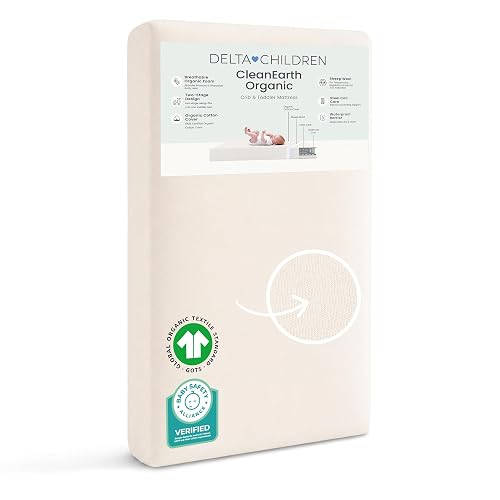
An organic Naturepedic crib mattress is a firm, breathable infant sleep surface built with certified organic materials and no added flame retardants. In this guide you will learn how to read Naturepedic’s certifications, check whether a mattress meets federal safe-sleep standards, confirm the right fit for your crib, and avoid the mistakes that trip up many parents. The goal is to help you pick a mattress you can trust and set it up so your baby sleeps on a safe, low-odor surface every night.
Why Parents Choose an Organic Naturepedic Crib Mattress
Most standard crib mattresses are made from polyurethane foam wrapped in vinyl or polyester ticking, and many are treated with chemical flame retardants to meet older fire codes. Parents who want fewer synthetic materials in the nursery often look for a mattress with organic cotton ticking, a natural latex or cotton core, and third-party certifications. Naturepedic is one of the best-known brands in this category, and its organic lines are usually discussed in terms of material transparency and off-gassing rather than marketing claims.
Shopping for one? See our guide: 7 Best Avocado Organic Crib Mattress Options for Safe Sleep (2026).
It helps to be precise about what “organic” means here. A mattress can be partly organic, with only the cover certified, or fully organic from fiber to foam. Read the product page closely and note which components carry certification, rather than assuming the whole mattress qualifies.
Step 1: Check the Organic and Safety Certifications
Certifications are the fastest way to separate verified claims from vague wording. Look for these labels on the product listing or the manufacturer’s spec sheet:
- GOTS (Global Organic Textile Standard) for organic cotton or wool components. Check that the certificate number is listed and that the certified percentage matches the product description.
- GOLS (Global Organic Latex Standard) if the core contains natural latex. Not every “natural” latex is certified organic.
- GREENGUARD or GREENGUARD Gold for low chemical emissions, which speaks to indoor air quality.
- CPSC compliance. Every crib mattress sold in the US must meet the federal safety standard for full-size and non-full-size cribs (16 CFR Part 1632 and 1633 for flammability, plus the crib safety rule). Confirm the manufacturer states compliance.
Certifications apply to specific materials and test conditions, so read what each one covers. A GOTS certificate does not automatically mean the foam core is organic, and a flame-resistance statement does not always mean chemical-free. If a claim matters to your decision, ask the manufacturer for the certificate and the test scope in writing.
Step 2: Confirm Firmness and Safe-Sleep Requirements
Safety is the first priority with any infant sleep surface, organic or not. The Consumer Product Safety Commission and the American Academy of Pediatrics both recommend a firm, flat mattress with no soft bedding in the crib. A baby should sleep on their back, on a mattress that does not give under the head or body.
When you evaluate firmness, use these checks:
- Press your palm into the center of the mattress. It should spring back quickly with little dip.
- Press at the edges. A good crib mattress stays firm right up to the rim, since babies roll toward the sides.
- Look for a mattress marked as firm or made for infant use. Avoid anything marketed as a toddler “memory” or plush surface for the crib.
Step 3: Measure the Crib and Match the Fit
A crib mattress must fit snugly. Any gap wider than two finger widths between the mattress and the crib frame is a entrapment risk, and a gap of that size can trap a baby’s head or limb. Measure before you order.
| Measurement | What to check | Target result |
|---|---|---|
| Inside length of crib | Measure from inside headboard to inside footboard | Mattress should be within about 1/2 inch of this |
| Inside width of crib | Measure side rail to side rail | Mattress should be within about 1/2 inch of this |
| Gap at sides and ends | Press fingers into the space after placement | No gap wider than two finger widths |
| Mattress thickness | Check it does not sit above the top rail | Top of the mattress well below the rail |
Naturepedic offers mattresses in standard crib size and also in some non-standard sizes, so confirm the dimensions match your specific frame. Crib manufacturers publish their inside dimensions, and that spec sheet is the best reference.
Step 4: Prepare the Crib for Safe Use
Once the mattress is in place, set up the sleep space the way safety guidance recommends:
- Use only a fitted sheet made for the crib mattress size. Pull it snug at all corners.
- Keep the crib empty apart from the baby: no pillows, blankets, bumpers, stuffed animals, or positioners.
- Place the mattress at the lowest setting as the baby grows, and stop using the crib when the baby can pull up on the rails.
- Ventilate the room and let a new mattress air out for a few days before first use if the packaging smells strongly.
Common Mistakes to Avoid
- Assuming “organic” covers everything. Check which parts carry certification and which do not.
- Buying a mattress that is too small. A loose fit is more dangerous than a slightly tight one. Measure again if you are unsure.
- Adding a second mattress pad or topper. Extra layers can raise the surface and create gaps. Use only the mattress the crib was designed for.
- Skipping the air-out period. A new mattress can carry manufacturing odor. Airing it out in a ventilated room is a reasonable step.
- Using a crib mattress with a damaged cover. Tears can expose foam and create a choking hazard. Replace any mattress with a split cover.
Recommended gear
- Organic cotton fitted crib sheet: a sheet sized for standard crib mattresses keeps the surface smooth and avoids loose fabric near the baby. View on Amazon
- Steel measuring tape: a rigid tape makes it easier to measure the inside of the crib accurately before ordering. View on Amazon
- Waterproof crib mattress protector: a thin, breathable protector can guard against spills without adding bulk. Choose one labeled as fitted and crib-sized. View on Amazon
Tips for Choosing and Caring for Your Mattress
- Keep the purchase receipt and the product label. You will need the model and date if you ever have a warranty question.
- Rotate or flip the mattress only if the manufacturer allows it. Some organic cores are designed to be used one way.
- Wipe the cover with a mild, fragrance-free cleaner. Harsh solvents can damage natural fibers and leave residue.
- Read the crib manufacturer’s guidance on compatible mattress thickness, since the wrong thickness can break the crib’s safety features.
- Check the mattress every few months for sagging, separated seams, or cover damage.
FAQ
Is an organic Naturepedic crib mattress safe for newborns?
Any crib mattress that meets the federal crib safety standard can be used for newborns, as long as it fits the crib snugly and the sleep space is kept clear. Naturepedic states its mattresses meet these standards, so confirm the current compliance statement on the product page.
What does “organic” mean for a crib mattress?
It means certain components, usually the cotton or wool cover and sometimes the latex core, are certified under a recognized organic standard such as GOTS or GOLS. The certification scope varies, so check which parts are covered.
Do organic crib mattresses contain flame retardants?
Some organic mattresses are built without added chemical flame retardants and rely on natural fibers or barrier materials to meet fire standards. Verify the specific flammability statement for the model you are considering.
How do I know if the mattress fits my crib?
Measure the inside length and width of the crib and compare them with the mattress dimensions. After placing the mattress, press your fingers into any gap at the sides or ends. Two finger widths or less is the usual safe limit.
Can I use a crib mattress topper with an organic mattress?
Generally no. Adding a topper raises the sleep surface and can create gaps, and it is not part of the tested safe-sleep setup. Use only the mattress the crib was designed for.
How long should a crib mattress last?
Lifespan depends on use, cover wear, and how well the core holds its shape. Replace the mattress if it sags, the cover tears, or it no longer fits the crib snugly.
Should I consult a professional before buying?
If you have a premature infant, a medical condition, or questions about your crib’s compatibility, talk with your pediatrician or a certified child passenger and nursery safety professional before you buy.
Conclusion
A good organic Naturepedic crib mattress combines verified certifications, a firm and safe sleep surface, and a snug fit in your specific crib. Check the certificates, measure carefully, and keep the sleep space free of extra bedding. Those steps matter more than any single marketing claim, and they will serve your baby well from the first night home.
Related reading
- When and How to Transition from Crib to Toddler Bed
- WIC Organic Baby Food: 7 Best Picks Compared for 2026
- Tummy Thyme Baby Food Organic: A Label-Reading Guide for Parents
- Sprout Organic Baby Food Kosher: Ingredient and Certification Guide
- Sprout Organic Baby Food Heavy Metals: What Parents Need to Know
Ready to choose one?

About Ava Langley
Ava covers natural & eco parenting, comparing specs, features and long-term owner feedback to help readers choose with confidence.