 By Ethan Brooks
Updated November 2026
Parents looking for organic baby food meats usually want two things at once: a real source of protein and iron, and assurance that the animals were raised and the ingredients were grown without synthetic pesticides or routine additives. This list compares six pouch and jar options built around chicken, beef, and turkey. Each pick was evaluated on published ingredient lists, stated organic certification, protein content, texture stage, packaging format, and the patterns owners commonly describe. We did not test these products ourselves; the notes below rely on manufacturer specifications and general owner feedback.
Our top picks at a glance
- 1
 TOP CHOICEBest overallHAPPY BABY Savory Blends Stage 3 Variety PackView on Amazon
- 2
 TOP CHOICEBest for high proteinSerenity Kids Organic Baby Food Pouches, 5g Protein, 6 PackView on Amazon
- 3
 TOP CHOICEBest for varietyLi'l Hala Meat Baby Food Pouches, Stage 2View on Amazon
- 4
 Best for travel and bulk stockingSerenity Kids Baby Food Pouches, 24 PackView on Amazon
- 5
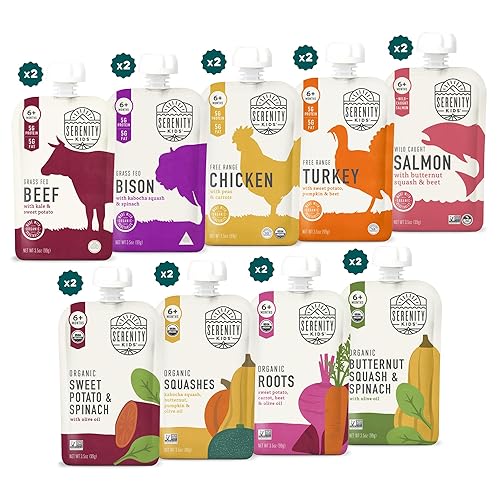 Best for low sugarSerenity Kids Baby Food Pouches, 18 PackView on Amazon
- 6
 Best for jar loversGerber Stage 2 Beef and Gravy Baby Food, 10 PackView on Amazon
Our Top Picks
Quick Comparison
| Product | Best for | Key feature |
|---|---|---|
| HAPPY BABY Savory Blends Stage 3 Variety Pack | Babies moving to chunkier textures | Chicken, beef and turkey blends with quinoa and vegetables |
| Serenity Kids Organic Baby Food Pouches, 5g Protein, 6 Pack | Protein-focused feeding | 5 g protein per pouch, no added sugar |
| Li’l Hala Meat Baby Food Pouches, Stage 2 | Trying a range of savory flavors | Chicken and beef purees with organic vegetables |
| Serenity Kids Baby Food Pouches, 24 Pack | Travel and holiday stocking | Six meat-and-vegetable purees in a large multipack |
| Serenity Kids Baby Food Pouches, 18 Pack | Families limiting sugar | Veggie-first recipes with recyclable pouches |
| Gerber Stage 2 Beef and Gravy Baby Food, 10 Pack | Parents who prefer glass jars | Single-ingredient-style beef and gravy in glass |
HAPPY BABY Savory Blends Stage 3 Variety Pack
USDA Organic Baby Food Pouch Variety Pack for Ages 7+ Months (4-Chicken, 2-Beef & 2-Turkey) with Quinoa & Veggies, Non-GMO HAPPY BABY Savory Blends Stage 3, Meats & Veggies Variety, 3.5oz (8 Pack)
Best for: Babies around 7 months and older who are ready for thicker, more textured savory meals.
This variety pack is aimed at families who want several meat flavors in one order. The listing describes USDA organic ingredients, a non-GMO positioning, and a mix of four chicken, two beef, and two turkey pouches, each combining protein with quinoa and vegetables. Parents who are rotating proteins to widen their baby’s palate often find a mixed pack easier than buying single flavors.
Key specs:
- Stage 3 (suitable from about 7 months per the listing)
- 8 pouches, 3.5 oz each
- Proteins: chicken, beef, turkey
- USDA organic (per listing)
Pros:
- Several meat flavors in one order
- Quinoa adds texture for babies progressing past purees
- Clear organic and non-GMO labeling
Cons:
- Pouches are a single size, which may be more than a small eater needs at first
- Texture is chunkier than Stage 1 or Stage 2 products, so it is not right for early starters
Bottom line: A strong choice for parents of older infants who want variety and a textured, meal-style food.
Serenity Kids Organic Baby Food Pouches, 5g Protein, 6 Pack
5g Protein, No Added Sugar, Savory Meat Pouches, Baby Snacks, Toddler Food, Organic Ingredients Serenity Kids Organic Baby Food Pouches, 5g Protein, 3.5 Oz, 6 Pack
Best for: Parents who want a higher protein count per pouch without added sugar.
This six-pack is built around savory meat pouches with a stated 5 g of protein per serving. Families who track protein intake for a toddler, or who are supplementing a diet that is light on animal foods, may find the protein figure useful when comparing options.
Key specs:
- 5 g protein per pouch (per listing)
- No added sugar (per listing)
- Organic ingredients (per listing)
- 6 pouches, 3.5 oz each
Pros:
- Protein content is stated clearly on the listing
- No added sugar, which many parents look for in savory foods
- Small count makes it easy to try before committing to a larger pack
Cons:
- Six pouches go quickly for families feeding multiple meals a day
- Protein claims should be weighed against the rest of the child’s diet, and a pediatrician or registered dietitian can advise on total intake
Bottom line: Good for parents prioritizing protein and low sugar in a small, low-commitment pack.
Li’l Hala Meat Baby Food Pouches, Stage 2
Chicken & Beef Savory Purees, Organic Veggies, Toddler Snacks, Iron & Fiber, 6+ Month, Variety Pack Li’l Hala Meat Baby Food Pouches, 18 ct, Stage 2
Best for: Families who want to offer a mix of chicken and beef purees in a single purchase.
This 18-count assortment is labeled Stage 2 and combines chicken and beef purees with organic vegetables. Its appeal is the number of pouches, which suits households that rotate flavors daily or want a supply that lasts several weeks.
Key specs:
- Stage 2 (per listing)
- 18 pouches
- Chicken and beef savory purees
- Organic vegetables (per listing)
Pros:
- Large count offers good supply for the money in a bulk-style purchase
- Smooth Stage 2 texture suits babies still building chewing skills
- Two proteins give flavor variety
Cons:
- Limited to two meat types, so it offers less variety than a mixed pack
- Owners sometimes note that flavors can taste similar across pouches
Bottom line: A practical stocking choice for parents of Stage 2 eaters who want a large supply of chicken and beef.
Serenity Kids Baby Food Pouches, 24 Pack
Thanksgiving Travel & Family Gatherings, 6 Meat-&-Veg Purees, Baby Travel Essential, Organic Baby Snacks, Toddler Food Serenity Kids Baby Food Pouches, 5g Protein,No Added Sugar, 3.5 Oz, 24 Pack
Best for: Travel, holiday visits, and families who want a large, ready-to-go supply.
This 24-pack contains six meat-and-vegetable purees and is marketed as a travel-friendly option. The pouch format needs no refrigeration before opening, which makes it convenient for car trips, flights, and visits where a heated jar is not practical.
Key specs:
- 24 pouches, 3.5 oz each
- Six meat-and-vegetable recipes (per listing)
- No added sugar and 5 g protein per pouch (per listing)
- Organic ingredients (per listing)
Pros:
- Large multipack covers weeks of travel or stockpiling
- Shelf-stable pouches are easy to pack
- Consistent recipe line makes it simple to reorder
Cons:
- Once opened, pouches should be used promptly and not stored for later meals
- Bulk buying only makes sense if your baby reliably eats these flavors
Bottom line: Best for families who travel often or want a dependable supply on hand.
Serenity Kids Baby Food Pouches, 18 Pack
Lower-Sugar, Protein-Fueled, Organic Ingredients, Recyclable, Meat & Veg Variety, Veggie-First Baby Snacks Serenity Kids Baby Food Pouches, No Added Sugar, 5g Protein, 3.5 Oz,18 Pack
Best for: Parents who want savory meat options with a veggie-first approach and lower sugar.
This 18-pack emphasizes vegetables as the base of each recipe, with meat added for protein. Parents concerned about sugar, or those who want their child to accept vegetables alongside meat, may find this positioning appealing.
Key specs:
- 18 pouches, 3.5 oz each
- Meat and vegetable variety (per listing)
- No added sugar and 5 g protein per pouch (per listing)
- Recyclable pouches (per listing)
Pros:
- Veggie-first recipes support vegetable acceptance
- Recyclable packaging appeals to eco-minded families
- Mid-sized count balances supply and freshness
Cons:
- Vegetable-forward flavor may be less rich for babies who prefer strong meat taste
- Recyclability depends on local pouch recycling programs, so check your area
Bottom line: A balanced pick for families who want meat, vegetables and low sugar in one routine.
Gerber Stage 2 Beef and Gravy Baby Food, 10 Pack
Stage 2 mealtime meat puree; beef and gravy; 10 x 2.5 oz glass jars Gerber Stage 2 Beef and Gravy Baby Food, 2.5 Oz, 10 Pack
Best for: Parents who prefer glass jars and a traditional mealtime beef puree.
This ten-jar set is a Stage 2 mealtime puree of beef and gravy. Glass jars are often chosen by parents who want to portion food with a spoon, warm it gently, and avoid plastic packaging. The format is also familiar to many caregivers and childcare providers.
Key specs:
- Stage 2 (per listing)
- 10 jars, 2.5 oz each
- Beef and gravy recipe
Pros:
- Glass jars are reusable and easy to portion
- Smaller 2.5 oz size suits small appetites and reduces waste
- Familiar, widely available format
Cons:
- Single flavor, so variety depends on buying other products
- Jars are heavier to carry on trips than pouches
Bottom line: A good fit for jar-preferring families who want a classic beef puree in a small portion size.
Buying Guide
Check the organic certification and what it covers
In the United States, a product labeled “USDA Organic” must contain at least 95 percent certified organic ingredients, excluding salt and water, and must meet USDA National Organic Program rules for production and handling. Products labeled “made with organic ingredients” contain at least 70 percent organic ingredients. Read the front of the package and the certification seal, then confirm that the meat itself, not just the vegetables, is covered by the claim. Organic standards also apply to how livestock are raised, including access to pasture and restrictions on routine antibiotics.
Good picks for this: HAPPY BABY Savory Blends Stage 3 Variety Pack, Li’l Hala Meat Baby Food Pouches
Match the texture to your baby’s stage
Stage 1 foods are thin and smooth, Stage 2 foods are thicker purees, and Stage 3 foods have more texture and small pieces. Starting too chunky can be a choking or gagging concern for younger infants, while staying on very smooth purees for too long can slow the transition to chewing. Check the stage on the label and move up when your baby handles the current texture comfortably.
Good picks for this: Li’l Hala Meat Baby Food Pouches, Gerber Stage 2 Beef and Gravy Baby Food
Compare protein per serving
Meat is one of the main protein sources in a baby’s diet once solids begin. Some brands state grams of protein per pouch on the label or listing, which makes comparison easier than guessing from ingredient order. Compare the stated protein against the serving size, and remember that total daily intake matters more than any single pouch. A pediatrician can help you judge whether a child’s protein intake is appropriate for their age and growth.
Good picks for this: Serenity Kids Organic Baby Food Pouches, 5g Protein, Serenity Kids Baby Food Pouches, 24 Pack
Read the full ingredient list
Look past the marketing claims to the ingredient panel. Meat should appear as a named animal ingredient such as chicken or beef rather than a vague term. Watch for added sugars, salt, thickeners and flavor additives. Many parents prefer short ingredient lists with recognizable foods. Organic status does not automatically mean low sodium or no added sugar, so check those numbers separately.
Good picks for this: Serenity Kids Baby Food Pouches, 18 Pack, Serenity Kids Organic Baby Food Pouches, 5g Protein
Consider packaging format
Pouches are portable, require no heating when served cold or at room temperature, and are easy to pack for travel. Glass jars are reusable, make portioning with a spoon simple, and avoid plastic contact with the food, though they are heavier and need warming for many meals. Choose the format that fits how you actually feed your baby, whether that is on the go or at a high chair.
Good picks for this: Serenity Kids Baby Food Pouches, 24 Pack, Gerber Stage 2 Beef and Gravy Baby Food, 10 Pack
Check storage and shelf life after opening
Once a pouch or jar is opened, the food should be used promptly or refrigerated according to the label, and leftovers should generally be discarded after about one to two days. Do not feed directly from a pouch and save the rest, since saliva introduces bacteria. Warm jarred food to a safe, even temperature, stir well, and test before serving. Store unopened products in a cool, dry place away from direct sun.
Good picks for this: Gerber Stage 2 Beef and Gravy Baby Food, 10 Pack, Serenity Kids Baby Food Pouches, 24 Pack
Think about variety and rotation
Offering different proteins and vegetables over time may help babies accept a wider range of flavors. Mixed packs make rotation easy, while single-flavor multipacks are better when you already know your baby’s favorites. Pay attention to signs of food sensitivity, and introduce new foods one at a time so any reaction is easier to identify. For allergy concerns, talk with your pediatrician before starting new foods.
Good picks for this: HAPPY BABY Savory Blends Stage 3 Variety Pack, Serenity Kids Baby Food Pouches, 18 Pack
FAQ
Is organic baby food meat safer than conventional?
Organic certification restricts synthetic pesticides, synthetic fertilizers in produce, and certain animal-raising practices, but it does not make a food automatically safe or nutritionally superior. Both organic and conventional meat must meet federal food safety standards. Many parents choose organic for reduced exposure to certain substances and for the production standards, while others find conventional meat equally suitable. Your decision can reflect your values and budget.
When can babies start eating meat purees?
Most pediatric guidance supports introducing iron-rich foods, including meat, around six months as part of starting solids. Iron stores from birth begin to decline around this age, so meat is a helpful source. Ask your pediatrician about timing, especially if your baby was born early or has specific health needs.
What is the difference between Stage 2 and Stage 3 baby food?
Stage 2 foods are thicker purees, often suited to babies roughly six to nine months old, while Stage 3 foods contain more texture and small soft pieces for older infants. Stage labels are guides rather than strict rules, and each baby develops at a different pace. Choose the texture your baby handles safely and comfortably.
Do organic baby food meat pouches contain added sugar?
Many savory meat pouches are formulated without added sugar, but this varies by brand and recipe. Check the ingredient list and nutrition panel, since fruit or vegetable purees can still contribute natural sugars. Look specifically for “no added sugar” statements or review the ingredients directly.
How long can I keep opened baby food pouches or jars?
Once opened, use food within the time recommended on the label, typically one to two days when refrigerated. Discard any leftovers after a feeding, especially if the food was fed directly from a spoon or pouch. When in doubt, throw it out rather than risk bacterial growth.
Can organic baby meat replace homemade purees?
Store-bought organic meat can be a convenient alternative to homemade purees, especially when traveling or when time is limited. Homemade food gives you control over ingredients and texture, while commercial products offer consistency and safety testing. Many families combine both approaches. A pediatrician or registered dietitian can help you plan a balanced feeding routine.
Are glass jars or pouches better for baby meat?
Neither format is universally better. Pouches are portable and need no heating, while glass jars are reusable and easier to portion with a spoon. Choose based on your routine, travel needs and how much you value reusable packaging.
Conclusion
If you want one dependable all-around choice, the HAPPY BABY Savory Blends Stage 3 Variety Pack offers several organic meat flavors in a textured format for older infants. Parents focused on protein and low sugar will find the Serenity Kids pouches useful, with the 6-pack suited to trying a product and the 24-pack to travel and stocking. Families who want a larger supply of Stage 2 chicken and beef may prefer the Li’l Hala 18-count, while jar-preferring households should consider the Gerber Stage 2 Beef and Gravy. Match the stage, texture and packaging to your baby, confirm the organic claim, and check with your pediatrician about protein needs and allergy introduction.
Sources
- Organic labeling rules, including the 95 percent and 70 percent ingredient thresholds and the National Organic Program standards (usda.gov)
- Guidance on infant nutrition, introducing solid foods and food safety for babies (fda.gov)
- Pediatric recommendations on starting solids, iron-rich foods and feeding progression (aap.org)
Related reading
- 7 Best Organic Baby Food with Meat for Every Need (2026)
- 7 Best Organic Baby Food Meat Stage 1 Picks for 2026
- 6 Best Organic Pureed Meat Baby Food for Stage 2 Picks (2026)
About Ethan Brooks
Ethan Brooks is part of our editorial team and reviews and edits our natural & eco parenting guides, checking product details against manufacturer specifications and owner feedback.