
 By Audrey Hayes
Updated November 2026
The katu organic 2-stage crib mattress is built from natural latex and coconut fiber, with organic certifications listed in the product title. It suits parents who want a crib mattress with a natural material profile and a firmer, two-sided sleep surface for infants through toddler years. It is a poor fit for families who need a waterproof surface out of the box, who want a very light mattress they can carry easily, or who have a latex allergy. Read on for the specifications, the trade-offs, and a checklist for deciding whether it belongs in your nursery.
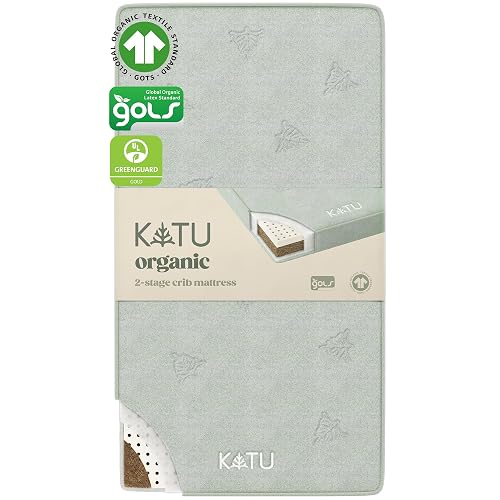
KATU 100% Organic Latex+Coconut 2-Stage Crib Mattress for Infant/Newborn/Toddler Safe Non-Toxic Hypoallergenic Breathable GOTS GOLS w
Product Overview
This is the KATU 100% Organic Latex and Coconut 2-Stage Crib Mattress, listed for infant, newborn, and toddler use. The name describes a two-stage design, which generally means one side is firmer for newborns and the other is softer for older babies and toddlers. The listing positions it as hypoallergenic, breathable, and non-toxic, and it references GOTS and GOLS certifications.
Parents shopping in this category usually compare three things: the core material (latex, foam, or innerspring), the cover fabric, and the certifications behind the marketing words. If you are new to these terms, our guide Katu Organic Crib Mattress: What to Check Before You Buy (2026) walks through what each claim actually means. Certifications on a mattress label should always be verified on the certifier’s own website rather than taken from the product copy.
Because the product is sold through a third-party seller on Amazon, the exact specifications can vary by batch or variant. Confirm the dimensions and certification numbers on the listing and on the packaging before you buy.
Key Features & Specifications
The table below lists only what the product name states or what is well established for this type of construction. Where a detail is not stated in the listing, it is marked as not specified rather than guessed.
| Feature | What the listing states | What it means for you |
|---|---|---|
| Core material | Organic latex and coconut | Latex is a natural rubber-based foam; coconut coir is a natural fiber layer. Both are usually firmer and more supportive than standard polyurethane foam. |
| Design | 2-stage (two sleep surfaces) | Typically one firmer side for newborns and one softer side for older babies. Check the manufacturer’s instructions for which side to use at each age. |
| Intended users | Infant, newborn, toddler | Suitable for standard crib use as stated in the listing. |
| Certifications | GOTS and GOLS referenced | GOTS covers organic textiles; GOLS covers organic latex. Verify current certificate numbers with the certifiers. |
| Claimed properties | Hypoallergenic, breathable, non-toxic | These are marketing terms. Breathability depends on the cover and core together; no single number is given in the listing. |
| Dimensions | Check listing (standard crib size is commonly 52 x 28 inches) | Measure your crib interior before ordering. A mattress that is too small leaves gaps that are a safety hazard. |
| Thickness | Not specified in the product name | Confirm height against your crib’s rail height and the manufacturer’s maximum recommendation. |
| Waterproofing | Not stated in the product name | Plan on a separate waterproof fitted pad if you need one. |
Pros & Cons
Pros
- Latex and coconut construction avoids standard polyurethane foam as the primary core.
- Two sleep surfaces let you adjust firmness as your child grows.
- Organic and latex certifications are named in the listing, giving you something concrete to verify.
- Latex cores are commonly described by owners as resilient and slow to develop body impressions.
- Suitable for a wide age range, from newborn through toddler, under the listing’s stated use.
Cons
- Latex is a known allergen for some people; families with latex sensitivity should avoid this product entirely.
- Latex and coir mattresses are typically heavier than foam options, which can make changing sheets or moving the mattress harder.
- No waterproofing is listed, so a separate protector is likely needed.
- Certification claims require independent checking, and the listing alone does not prove them.
- Off-gassing odor is sometimes mentioned in owner feedback for latex products, especially in the first days after unpacking.
Performance Analysis
Performance for a crib mattress comes down to support, airflow, firmness consistency, and how the surface holds up over time. Because the listing does not publish test data, this analysis is based on the construction type and the patterns that appear across owner discussions of latex and coconut crib mattresses in general.
Support and firmness
Latex cores generally give firm, even support. Infant safety guidance calls for a firm, flat surface with no dips, and a dual-firmness design is intended to help with that across developmental stages. Owners of similar latex mattresses often describe them as holding their shape well, which matters for keeping the fitted sheet snug and the surface level. Check the firmness of each side by pressing with your hand; both sides should feel firm and flat to an infant.
Airflow and breathability
Natural latex and coconut fiber are both more breathable than dense foam in general terms. Breathability still depends on the cover, the number of layers, and whether the surface is covered with a thick protector. A waterproof protector that is plastic-backed or heavily laminated can reduce airflow, so choose a protector with a breathable, vapor-permeable design if you use one.
Durability and care
Latex is generally durable and resists sagging, though it can be affected by heat and direct sunlight over long periods. Keep the mattress away from radiators and sunny windows. Owners of latex products often recommend rotating or flipping periodically to even out wear, and spot-cleaning the cover rather than soaking it. Follow the manufacturer’s care label closely.
Odor and first use
Some latex mattresses have a noticeable initial smell. Unpack the mattress in a ventilated room and allow time to air out before placing it in the nursery. Pay attention to how long the odor persists; a mattress that still smells strongly after several days should be questioned with the seller.
Who Should Buy This Product?
This mattress makes sense for parents who want a natural-material core, a firm surface, and two firmness levels across the early years. It suits families who have already decided that latex and coir are acceptable to them and who will verify the certifications directly.
It is a poor choice if anyone in the home has a latex allergy, if you need a mattress you can easily lift and carry, or if you want a waterproof surface built in. If you are looking for a wider comparison across brands, our article Organic Mattress for Crib: A Step-by-Step Guide to Safe Sleep (2026) explains how to evaluate options side by side.
Consult your pediatrician before making a final decision, especially if your baby has known allergies, a medical condition, or specific sleep concerns.
Buying Guide
Use the steps below before ordering any crib mattress, including this one.
- Measure your crib. Measure the interior length and width and compare with the listing. A standard crib is commonly 52 x 28 inches, but older or non-standard cribs vary. The mattress should fit snugly with no gap wider than two fingers along any edge.
- Check the thickness. Confirm the mattress height leaves the top of the mattress at least the distance recommended by your crib manufacturer below the top rail.
- Verify certifications. Look up GOTS and GOLS certificate numbers on the certifier’s public directory. Our guide to Katu Organic Crib Mattress: What to Check Before You Buy (2026) covers this in detail.
- Plan your protector. Buy a breathable, waterproof fitted pad at the same time so you are not tempted to place a bare mattress or a plastic sheet under the baby.
- Check the return policy. Confirm return terms before ordering, especially given possible off-gassing or fit issues.
Well-known alternatives
If the latex and coconut build is not right for your household, two well-known options to compare are below. Both are common choices in the natural-materials category.
The Naturepedic 2-stage lightweight crib mattress is a widely recognized organic option that is lighter than latex designs and is often chosen by parents who want easier handling. Compare its certifications and core materials with this product before deciding.

Naturepedic Organic Baby Crib Mattress – 2-Stage Lightweight Infant & Toddler Mattress – Waterproof Bed Mattress for Crib – Non-Toxic for Baby and Toddler Bed – 52" x 28”
The organic cotton covered dual-sided crib mattress with memory foam core is a budget-to-mid option that uses a foam core rather than latex, with a waterproof and washable cover. It suits families who prefer foam and want a built-in waterproof surface. Confirm the foam certification and cover details on the listing.

Organic Cotton Covered Dual-Sided Crib Mattress | 2-Stage Premium Memory Foam CertiPUR-US Hypoallergenic Baby Mattress Firm Support for Infant Cooling Gel for Toddler, Waterproof Washable, 52×27.5×5.5
FAQ
Is the katu organic 2-stage crib mattress safe for newborns?
The listing states it is intended for infant and newborn use. For newborns, use the firmer side as directed by the manufacturer. Always follow safe sleep guidance: place the baby on the back, on a firm flat surface, with no loose bedding. Consult your pediatrician about your baby’s specific needs.
Does latex cause allergies?
Natural latex can trigger reactions in people with latex sensitivity. If anyone in your home has a known latex allergy, avoid this mattress. Ask your pediatrician if you are unsure.
How do I know the organic claims are real?
Look up the GOTS and GOLS certificate numbers provided by the seller on each certifier’s public database. A product name that mentions a certification is not proof by itself. Certificates should match the exact product and manufacturer.
Do I need a waterproof protector?
Waterproofing is not stated in the product name. Most parents use a breathable, waterproof fitted protector to guard the surface. Choose one that is vapor-permeable and fits the mattress exactly.
How should I clean the mattress?
Spot-clean the cover with mild soap and water, and let it air dry fully. Avoid soaking the mattress. Follow the manufacturer’s care label for any cover removal or washing instructions.
How do I reduce the odor when it arrives?
Unwrap the mattress in a ventilated room and leave it uncovered for several days. If the smell persists strongly, contact the seller about the issue before using it in the nursery.
When should I switch sides?
Follow the manufacturer’s guidance on which side to use at each stage. Many dual-firmness mattresses recommend the firmer side for newborns and the softer side as the child grows, but confirm the exact timing with the product documentation and your pediatrician.
Is this mattress suitable for toddlers?
The listing includes toddler use. Make sure the mattress is correctly sized for the crib and that the surface remains firm and flat, as it would for an infant.
Final Verdict
The katu organic 2-stage crib mattress is a reasonable option for families who want a natural latex and coconut core, a firmer two-sided design, and named organic certifications they can verify. It fits best with households that have no latex sensitivity and who are willing to plan for a separate waterproof protector and to air out the mattress on arrival. Its weight, the absence of listed waterproofing, and the need for independent certificate checks are the main limitations. Before buying, measure your crib, confirm the certifications on the certifier’s site, and talk to your pediatrician if your baby has specific health needs.
Related reading
About Audrey Hayes
Audrey Hayes is part of our editorial team and reviews and edits our natural & eco parenting guides, checking product details against manufacturer specifications and owner feedback.
