 By Audrey Hayes
Updated November 2026
A Simmons organic crib mattress can be a sound choice for a nursery, but only if you know how to check the claims behind the word “organic.” This guide walks you through what to verify on the label, how to confirm the materials and certifications, how to test fit and firmness, and how to keep the mattress safe over time. By the end, you will know how to decide whether a given Simmons organic crib mattress meets your standards and your baby’s safety needs.
Start With the Safety Standard, Not the Marketing
Every crib mattress sold in the United States must meet the federal safety standard for full-size and non-full-size cribs, which sets requirements for firmness, fit and construction. Before you look at organic materials at all, confirm that the product is labeled as meeting that standard. A mattress that is organic but does not fit the crib securely is not a safe mattress. Check the product page or packaging for compliance language, and look for a flat, firm surface that does not sag when you press on it.
Shopping for one? See our guide: Simmons Naturally Safer Organic Crib Mattress: 5 Best Options Compared (2026).
What “Organic” Should Mean on a Label
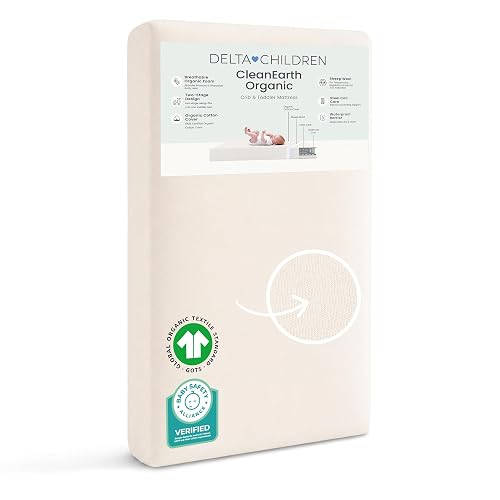
The word “organic” is not regulated uniformly across all consumer products, so you need to read what is actually claimed. For textiles, the strongest indicator is a Global Organic Textile Standard (GOTS) certification, which covers fiber harvesting, processing and chemical limits. Organic cotton grown under USDA standards carries its own labeling rules. A mattress may have an organic cover while the core uses synthetic foam, so check each component separately.
- Cover fabric: Is it certified organic cotton, and by which body?
- Core material: Is it natural latex, wool, coir, or polyurethane foam?
- Flame barrier: Is it a natural wool barrier or a chemical treatment, and is the chemical type disclosed?
- Adhesives and quilting thread: Are they described as low-VOC or certified?
Reading Certification Labels Correctly
A certification logo means little unless you know what it covers. GOTS covers the textile supply chain from fiber to finished product. OEKO-TEX Standard 100 tests finished textiles for harmful substances but does not verify organic farming. GREENGUARD and similar programs address indoor air emissions. Ask the manufacturer for the certificate number and check it against the certifying body’s public database, rather than relying on a logo alone.
Evaluate Materials and Construction
Once the safety and labeling basics check out, look at what is inside the mattress. Organic materials can perform differently from conventional foam in firmness, breathability and durability, so match the construction to your priorities.
Core Options to Compare
| Core Type | Typical Feel | What to Verify |
|---|---|---|
| Polyurethane foam (with organic cover) | Firm, uniform, light | Foam density and any flame-retardant disclosure |
| Natural latex | Bouncy, responsive | Latex source and certification |
| Coir with fiber layers | Firm, breathable | Coir and fiber certification |
| Hybrid (foam plus natural layers) | Balanced | Which layers are organic, and at what percentage |
Read the spec sheet for the thickness of each layer and whether the core is a single piece or multiple layers. Multi-layer cores can separate or shift, so check how the layers are bonded.
Firmness and Support
A crib mattress should be firm enough that a baby cannot sink into it. Press your palm into the center and edges. If your hand leaves a deep impression that takes several seconds to recover, the surface is too soft. Manufacturers typically specify a maximum thickness for the mattress, often in the range of about 6 inches, so that it stays within the crib’s height limits. Check the stated thickness against your crib’s specifications.
Check Fit and Dimensions
A mattress that is even slightly too small leaves gaps where a baby can become trapped. Measure your crib’s interior length and width, then compare them with the mattress dimensions listed by the manufacturer. The mattress should fit snugly with no more than about two fingers’ width of space between the mattress and the crib sides.
Step-by-Step Fit Check
- Measure the inside length and width of the crib frame at the level where the mattress will sit.
- Compare those numbers with the mattress’s listed dimensions, not the marketing name of the size.
- Place the mattress in the crib and push it into each corner.
- Slide two fingers between the mattress edge and the crib rail. If you can fit more, the mattress is too small.
- Confirm the mattress sits flat, with no folds or raised corners.
Plan for Waterproofing and Bedding
Most parents add a protector pad, and a natural-fiber waterproof layer can help protect an organic core from moisture. Choose a pad that fits the exact dimensions of your mattress. Avoid loose blankets, pillows, bumpers and soft toys in the crib, as these are recognized suffocation hazards for infants. A fitted sheet made for the specific mattress size is the only bedding item you should use.
Common Mistakes
- Assuming an organic cover means an organic core. Always check the full construction.
- Buying by crib nickname rather than measured dimensions.
- Choosing a mattress that is too soft because it feels comfortable to an adult.
- Using a thick aftermarket pad that raises the sleep surface and reduces safety margins.
- Ignoring recalls and manufacturer notices. Register the product so you receive safety alerts.
- Keeping an old mattress after it becomes stained, cracked or sagging.
Tips for Care and Longevity
Rotate the mattress every few months if the manufacturer allows it, and air it out in a dry room. Spot-clean the cover with mild soap and water, and let it dry completely before reuse. Replace the mattress if it cracks, tears, or no longer holds its shape. Keep it on a firm, flat support, and never place it in a crib with a damaged frame.
FAQ
Is a Simmons organic crib mattress safe for newborns?
It can be, provided it meets the federal crib safety standard, fits your crib snugly and has a firm, flat surface. Confirm these details on the product documentation before purchase.
What certification should I look for on an organic crib mattress?
GOTS is the most comprehensive textile certification for organic fibers. Check that the certificate number is verifiable in the certifying body’s database.
How do I know if the mattress is firm enough?
Press firmly into the center and edges with your palm. The surface should spring back quickly and should not form a deep dip that a baby could sink into.
Can I use a mattress pad on top of it?
Yes, a thin waterproof pad designed for your exact mattress size is usually acceptable. Avoid thick pads that raise the sleep surface significantly.
How long does a crib mattress last?
Lifespan depends on use and materials. Replace it if it shows cracks, mold, persistent odor, sagging or any damage to the cover or seams.
Do organic materials affect the mattress’s firmness?
They can. Natural latex and coir behave differently from polyurethane foam, so compare the feel and specifications rather than assuming organic means softer or firmer.
Should I consult anyone before buying?
If your baby has a medical condition, premature birth history or breathing concerns, talk with your pediatrician before choosing a sleep surface.
Conclusion
Choosing a Simmons organic crib mattress comes down to three checks: verify the safety standard and fit, confirm what “organic” covers in each layer, and test the firmness and construction. Keep the sleep space clear of loose items and replace the mattress when it shows wear. With these steps, you can make a confident, informed choice for your baby’s nursery.
Related reading
- Savvy Baby Organic Crib Mattress: 5 Best Options for Safe Sleep (2026)
- Organic Quilted Crib Mattress Pad: How to Choose a Safe, Non-Toxic One (2026)
- Organic Naturepedic Crib Mattress: A Buyer's Guide to Safe Sleep (2026)
- Organic Mattress for Crib: A Step-by-Step Guide to Safe Sleep (2026)
- Organic Cotton Waterproof Crib Mattress Pad: How to Choose and Use One Safely
- Newton Organic Crib Mattress: How to Choose and Care for One (2026)
Ready to choose one?
About Audrey Hayes
Audrey Hayes is part of our editorial team and reviews and edits our natural & eco parenting guides, checking product details against manufacturer specifications and owner feedback.