 By Ethan Brooks
Updated November 2026
If you are looking for reusable cloth diapers for newborn babies, the two main choices are prefolds with a cover and fitted diapers with a snap or hook-and-loop closure. Prefolds win for parents who want the lowest-cost system per diaper and don’t mind a few folding steps, while fitteds win for parents who want a faster, more contained fit and fewer changes of clothes. Neither is the “right” answer for everyone, so the comparison below walks through what matters most during the first three months.
| Criterion | Prefold + Cover | Fitted Diaper |
|---|---|---|
| Initial fit on a newborn | Adjustable with folding; needs practice | Snug with snaps set to the smallest rise |
| Absorbency for heavy wetters | Strong; add inserts if needed | Strong; often built with multiple layers |
| Leak resistance | Depends on cover fit and fold | Generally better around the legs when sized well |
| Ease of use for caregivers | Requires folding and pinning or snapping a cover | Close and go, similar to disposables |
| Drying time | Fast for thin cotton prefolds | Slower because of thick layers |
| Number needed per day | Often more diapers, plus covers reused | Fewer changes per day with good absorbency |
| Best for | Budget-focused, hands-on parents | Parents who want simplicity |
Initial Fit on a Newborn: Prefold Versus Fitted
Newborns often weigh between about 5 and 8 pounds at birth, and their umbilical cord stump needs air and room. A diaper that is too bulky or sits too high can rub the stump or make the front of the diaper gap. Because of this, fit matters more in the first few weeks than at any other time.
Prefolds give you control. You fold the cloth into a shape that matches your baby’s size, then secure it with a snappi or a cover. Many parents find that a trifold in the center and a slightly narrower fold at the front gives the best coverage on a small body. The downside is that the fit depends on your folding skill and your baby’s shape, and it can shift when the baby kicks.
Fitted diapers come with elastic at the legs and waist and a closure that you set to the right rise. Most newborn fitteds offer rise settings, and you usually want the smallest setting for the first weeks. The fit is more consistent from one change to the next, but you need to choose a size that is truly designed for newborns, not a one-size model that is too big for a 7-pound baby.
Winner: Fitted diaper. For most new caregivers, a fitted gives a more predictable fit on a tiny baby. Prefolds can match that fit once you practice, so the gap is smaller for experienced users.
Absorbency and Leak Resistance: Which Holds Up Better?
Newborns wet frequently, often between 8 and 12 times a day in the early weeks, and some babies are heavy wetters. Absorbency is therefore the first thing most parents check.
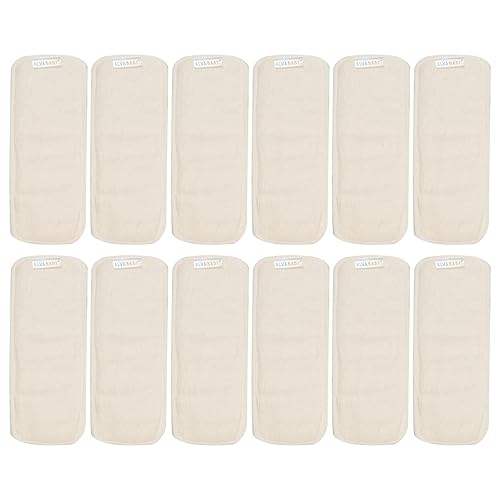
Prefolds are thick, multi-layer cotton or hemp squares that hold a large volume of urine. They are highly absorbent when they are new and after several washes. The weak point is the seam between the prefold and the cover. If the prefold is folded too thin at the front or the cover sits loose, urine can run out the leg openings. Adding a hemp or bamboo insert at the center can improve capacity without making the diaper bulky at the front.
Fitted diapers use stretchy leg cuffs and a built-in or stuffable absorbent core. Owners often report that fitteds contain leaks better at the legs when the elastic is snug, but they can leak at the back if the fit is loose. Manufacturers usually specify a maximum weight range for each size, so check that your baby is within that range before you buy.
Winner: Fitted diaper for leak control, prefold for raw absorbency. If your baby is a heavy wetter, a fitted with a second insert or a prefold with a snug cover can both work well.
Ease of Use for Caregivers: Which Is Faster in the Middle of the Night?
Night changes are where the two systems differ most. A fitted works like a disposable: you open the closures, remove the soiled diaper, and fasten a clean one. The whole change takes about the same time as a disposable.
A prefold system takes a few more steps. You lay the prefold in the cover, fold it, place it on the baby, and secure it. Many caregivers learn to do this in under a minute, but it takes more hand coordination, and a sleepy parent may find it frustrating at 3 a.m. Covers can also be reused for several changes if they are not soiled, which saves time on laundry.
Winner: Fitted diaper. For speed and simplicity during night feeds, a fitted is hard to beat. Prefolds reward parents who enjoy the process or who want to reuse covers.
Drying Time and Laundry Routine
Prefolds made of cotton dry fairly quickly, often within a few hours on a line in warm weather. Hemp takes longer. Fitteds have more layers, so they usually take longer to dry, especially if they have a thick microfiber or hemp core. Tumble drying can speed things up, but many manufacturers recommend air drying to preserve the elastic and the water-resistant layer of covers.
Laundry routines are similar for both systems. Most cloth diaper guides suggest a cold pre-rinse, then a warm or hot wash with a small amount of detergent that is free of fabric softener and added fragrance, since these can reduce absorbency and cause buildup. Check the manufacturer’s care label for your specific product.
Winner: Prefold, for faster drying of cotton versions. If you have limited drying space, prefolds in cotton can be easier to manage.
Number of Diapers Needed Per Day
The number of diapers you need depends on how often your baby wets and soils, how well each diaper absorbs, and how often you wash. Many parents plan for 12 to 20 diapers for a newborn, plus an extra stack for laundry days. Fitteds with high absorbency can stretch longer between changes, so you may need fewer total diapers. Prefolds are often used with covers that can be reused several times, which can reduce the number of covers you need, even though you need more prefolds.
Winner: Depends on your laundry frequency. If you wash every two days, a fitted stash may be easier. If you wash less often, prefolds with reusable covers can work well.
Which Should You Choose?
- Choose prefolds with covers if you want the most flexible, budget-friendly system and enjoy learning a hands-on technique.
- Choose fitted diapers if you want a disposable-like experience for night changes and fewer fit adjustments.
- Choose prefolds if you have limited drying space and prefer cotton or hemp that dries quickly.
- Choose fitteds if you have a heavy wetter and want strong leg-cuff containment without extra inserts.
- Choose a mix if you want prefolds for daytime and fitteds for overnight, which many parents find practical.
Here are example products for each option. Look for models that are labeled for newborns and check the weight range:
Prefold option: Bummis Prefold Diapers paired with a Bummis cover. View on Amazon
Fitted option: bumGenius Newborn All-in-Two Diapers. View on Amazon
For a deeper look at sizing and how many to buy, see How Many Newborn Cloth Diapers Do I Need? Our Picks and Buyer's Guide. If you want a broader list of options, 6 Best Cloth Diapers for Newborns: Our Picks Compared (2026) covers more models. Parents who prefer fitteds may also want Fitted Newborn Cloth Diapers: 7 Best Picks for Tiny Babies (2026), and those leaning toward prefolds can check 6 Best Indian Prefold Cloth Diapers for Newborns and Up (2026). For insert options to boost absorbency, read Reusable Liners for Cloth Diapers: How to Choose and Use Them.
FAQ
Are reusable cloth diapers for newborn babies safe for sensitive skin?
Many parents choose unbleached cotton or organic fibers for sensitive skin, and manufacturers often specify which materials they use. Change diapers promptly, rinse thoroughly, and avoid fabric softener. If your baby develops persistent redness, rash, or irritation, consult your pediatrician.
How often should I change a newborn in cloth diapers?
Most guides suggest checking every two to three hours and changing right after a bowel movement. Newborns often need changes 8 to 12 times a day. Check the diaper frequently in the early weeks, since wetness is easy to miss.
Do I need a special detergent for cloth diapers?
A basic, dye-free detergent without added fragrance or fabric softener is usually recommended. Some manufacturers list specific detergents in their care instructions, so follow those. Avoid products that leave a residue, since buildup can reduce absorbency.
Can I use prefolds with a fitted cover on a newborn?
Yes, many parents use prefolds with a snap or hook-and-loop cover designed for newborns. Make sure the cover fits snugly around the legs and waist, and check your baby’s weight against the cover’s stated range.
When should I switch from newborn to a larger size?
Switch when the diaper leaks at the legs or waist even after adjusting the fit, or when your baby’s weight reaches the upper limit listed by the manufacturer. Many babies outgrow newborn sizing within the first two to three months, but growth varies, so check the size chart. For individual health concerns, talk with your pediatrician.
Conclusion
For most parents starting out with reusable cloth diapers for newborn babies, a fitted diaper offers the most straightforward fit and the easiest night changes, while prefolds with covers offer flexibility, lower cost per diaper, and quick-drying cotton options. Consider your laundry schedule, your baby’s wetting pattern, and how much hands-on folding you enjoy. Many families end up using both systems, and that mix can be a sensible way to find out what works for your household.
Before you buy: helpful guides
About Ethan Brooks
Ethan Brooks is part of our editorial team and reviews and edits our natural & eco parenting guides, checking product details against manufacturer specifications and owner feedback.