 By Ethan Brooks
Updated November 2026
Non pocket cloth diapers, such as prefolds, flats, and fitted diapers with separate covers, win for families who want low upfront spending, fast drying, and simple cleaning. Pocket diapers win for parents who want a one-piece, quick-change system that feels close to disposables. Most of the choice comes down to how much time you want to spend on laundry and how often you expect to change your baby.
Both types can be used from the newborn stage through toddlerhood, and both work well with the right cover and fit. The differences show up in drying time, absorbency, daytime convenience, and how easily a caregiver who is not you can change the baby. Below, each criterion has a winner so you can match the system to your household.
Quick Comparison Table
| Criterion | Non Pocket Cloth Diapers | Pocket Cloth Diapers |
|---|---|---|
| Construction | Separate absorbent layer (prefold, flat, or fitted) plus a waterproof cover | Shell with a stay-dry inner lining and a stuffable pocket for absorbent inserts |
| Drying time | Usually faster; cotton and bamboo layers dry quickly on a line | Slower; the pocket and inserts retain more moisture |
| Ease of use for caregivers | Requires folding and fastening a cover; more steps | Stuff, snap, and go; closest to disposables |
| Absorbency control | Add or remove layers to match age and wetting pattern | Adjust by number and type of inserts in each pocket |
| Wash routine | Absorbent layers and covers washed separately or together | Whole diaper washed together; stuffing removed before wash |
| Best for | Budget-minded families, drying-line users, overnight layering | Daycare, grandparents, partners, and busy daytime routines |
Construction and Parts
Non pocket systems split the job between two pieces. The absorbent layer, usually a prefold, flat, or fitted diaper, sits inside a waterproof cover. Many parents use a wool or PUL cover over the absorbent piece, and they change only the inner layer when it is wet while reusing the cover several times if it is not soiled. This separation is the main reason these systems are so flexible.
Pocket diapers combine everything into one garment. The outer shell is waterproof, the inner lining is designed to stay dry against the skin, and a slit opening lets you stuff absorbent inserts into the pocket. You remove the inserts before washing. Because all the layers stay attached to one shell, the diaper looks and handles like a disposable.
Winner: Non pocket cloth diapers for customization. You can build the system from parts you already own, and you can swap one piece without replacing a whole diaper.
Drying Time and Laundry Load
Drying time is where non pocket systems often pull ahead. Cotton prefolds and flats dry quickly on a clothesline or drying rack, usually within a few hours in good weather. Bamboo and hemp layers also dry faster than the dense multi-layer stacks found in many pockets. Covers, especially PUL, dry fast as well, though you should keep them away from high heat.
Pocket diapers hold more moisture because the inserts sit in a sealed sleeve. Microfiber and some bamboo inserts can take a full day or longer to dry in a humid room. Many manufacturers specify tumble drying on low for faster results, while others prohibit dryer use to protect the elastic and the waterproof laminate. Check the care label for your specific brand before choosing a method.
If your home has limited drying space, the non pocket approach still needs room for a rack, but the overall drying load is usually lighter. Owners often report that a wash day with prefolds and covers is quicker to hang than a full load of pockets with inserts.
Winner: Non pocket cloth diapers for drying speed and simpler line-drying.
Absorbency and Overnight Performance
Both systems can handle overnight wetting, but the approach differs. With non pocket diapers, you can layer a prefold or a booster under a fitted diaper and adjust the number of layers for heavy wetters. A common setup is one or two extra inserts in the back for nap or night use, depending on the baby’s output.
In a pocket diaper, absorbency depends on what you stuff in the pocket. Most users add one or two inserts for daytime and two or three for overnight. Microfiber inserts absorb quickly but can compress and leak if overloaded, so many parents pair them with a natural-fiber insert for a softer feel and better wicking. Keep in mind that stuffing too many layers into a pocket can make the diaper bulky under pajamas.
For very heavy wetters, the non pocket system gives you more room to experiment with layer order and fabric choice. A pocket diaper is easier to get right on a standard routine, but you may outgrow its built-in capacity sooner.
Winner: Non pocket cloth diapers for flexible overnight absorbency and layering control.
Ease of Use for Daily Caregivers
This criterion is where pockets shine. A pocket diaper is closest to a disposable in daily use. Once the inserts are in place, the caregiver snaps or fastens the diaper and is done. That makes pockets a strong choice for daycare staff, grandparents, babysitters, and partners who may not be comfortable with folding. If you are the only caregiver who changes diapers, the learning curve matters less.
Non pocket systems need one or two extra steps. The caregiver must fold a prefold or fit a flat, then place it inside the cover and fasten the closures. Good fold technique takes a few practice changes to get right, and a loose fold can leak. Fitted diapers with snaps or hook-and-loop closures are easier, but they still require more handling than a one-piece design.
Winner: Pocket cloth diapers for quick, disposable-style changes.
Cost of Ownership and Long-Term Value
Non pocket systems are often the budget-friendly path because you can start with a small number of covers and a stack of inexpensive prefolds or flats. Reusing covers across several changes and adding absorbent layers as needed keeps the number of purchases low. Because the parts are simple, you can often replace a single component instead of an entire diaper.
Pocket diapers are typically a premium option, since every diaper is a complete unit with its own shell and lining. You may need 18 to 24 of them for a full-time routine to avoid daily laundry. That said, many families value the convenience enough to justify the spend, and some pockets are sold as one-size styles that fit from newborn through potty training.
Keep in mind that total cost also depends on your washing method, water use, and whether you use a drying machine. Those ongoing expenses can narrow the gap between the two systems over time.
Winner: Non pocket cloth diapers for lower starting cost and the ability to build a system gradually.
Fit, Comfort, and Growth
Fit is a common concern for newborns and for babies who are growing quickly. Non pocket systems can be adjusted with prefold folds, insert counts, and cover sizes. Many parents use a newborn-sized cover and then move to a larger size as the baby gains weight. Fitted diapers come in multiple sizes, and some have rise settings.
Pocket diapers often advertise one-size or adjustable designs. These can work from roughly 8 to 35 pounds, but the fit at the very start and very end of that range can be less snug than a dedicated newborn style. The rise and leg openings usually have a few settings, which helps with comfort as your baby grows.
Winner: Tie. Both systems fit well when the right size or setting is chosen, and the best choice depends on your baby’s build.
Which Should You Choose?
- Choose non pocket cloth diapers if you want the lowest starting cost, you plan to line-dry, and you like building a custom absorbency setup.
- Choose non pocket cloth diapers if you are an overnight layering parent or you have a heavy wetter who needs extra absorbency.
- Choose pocket cloth diapers if you have daycare, grandparents, or a partner who will change diapers and needs a simple, disposable-style process.
- Choose pocket cloth diapers if you want a one-piece diaper that feels close to disposables and you do not mind a longer drying time.
- Consider a mix of both if you want pockets for daytime and non pocket layering for nights.
If you are just starting out, the fundamentals are worth reading first. Our guide to Cloth Diapering for Beginners: How Cloth Diapers Work explains the basic parts of a cloth system, and Types of Cloth Diapers gives an overview of each category. Once you know which direction you want, you can narrow your options.
Product Examples for Each Option
Below are examples of real products in each category. Check current sizing and care instructions before buying.
Non Pocket Option
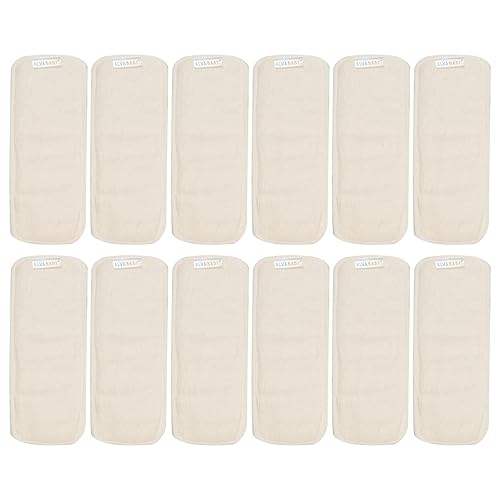
Prefold and cover systems are the classic non pocket setup. Many parents use a cotton prefold with a wool or PUL cover. Here is a common example:
If you prefer a fitted style with a separate cover, the What Are Prefold Cloth Diapers? A Beginner's Guide (2026) article explains how the prefold layer fits into a complete system.
Pocket Option
Pocket diapers are sold as complete units with inserts. A widely available example is the Bumgenius Freetime all-in-two style, which lets you adjust the insert setup:
For more pocket picks across different needs, see 6 Best Cloth Pocket Diapers for Everyday Use (2026) and 4 Best One Size Cloth Pocket Diapers for Everyday Use (2026).
Care and Maintenance Tips
Both systems need consistent care to stay absorbent and to avoid odor. Rinse soiled diapers, wash on a warm cycle with a cloth-diaper-safe detergent, and avoid fabric softener, which can coat fibers and reduce absorbency. Our guide to What Detergent Is Best for Cloth Diapers? 6 Picks Compared (2026) covers detergent options in more detail.
For non pocket systems, dry prefolds and flats on a line or rack when possible. Dry covers away from direct heat. Pocket diapers need the inserts removed before washing, and you should follow the manufacturer’s rule on dryer use. If you plan to use a vinegar rinse to refresh the fabric, read Vinegar for Cloth Diapers: A Step-by-Step Guide to Fresh Results first, since some covers and elastics can be damaged by repeated acid exposure.
FAQ
Are non pocket cloth diapers better for newborns?
Many parents like prefolds and covers for newborns because the absorbent layer can be sized tightly around a small body and changed often. Newborns also wet frequently, so a flexible layering setup can help. Pocket diapers with a newborn setting also work well. Choose the one that fits your baby and that you can change quickly.
Do non pocket diapers leak more than pockets?
Leaks usually come from fit, not the system itself. A loose prefold fold or a cover that is too large can let fluid escape. Pockets can also leak if the inserts are overloaded or the fit is poor. Test the fit on your baby and check the leg gaps and waist after the first few wears.
How many diapers do I need for each system?
For a daily routine without daily laundry, many families use roughly 18 to 24 pocket diapers or a combination of around 12 to 20 absorbent layers with 4 to 6 covers. Your count depends on how often you wash, how many changes your baby needs, and your drying setup. Adjust based on your laundry schedule.
Can I use a pocket diaper overnight?
Yes, but you may need to add more inserts than you use during the day. Some parents layer a prefold inside a pocket for extra absorbency. Check for leaks after the first few nights and adjust the stuffing. If your baby is a very heavy wetter, a non pocket layering setup may give you more control.
Is it safe to use vinegar or bleach on cloth diapers?
Vinegar and bleach can both affect fabrics, elastics, and laminates, so check the manufacturer’s directions before using either. Bleach should be used with caution and only as directed for your fabric type. If you have questions about a specific stain, odor, or skin reaction, consult your pediatrician or a qualified professional.
Conclusion
Non pocket cloth diapers are the stronger choice for families who want a lower starting cost, faster drying, and fine control over absorbency. Pocket diapers are better for caregivers who want a disposable-style change with no folding. Many families end up using both, so consider starting with the system that matches your most frequent caregiver and adding the other as your routine develops.
Before you buy: helpful guides
About Ethan Brooks
Ethan Brooks is part of our editorial team and reviews and edits our natural & eco parenting guides, checking product details against manufacturer specifications and owner feedback.