 By Audrey Hayes
Updated November 2026
An organic vs non organic crib mattress comparison comes down to what goes into the foam, cover and fire barrier, and whether independent certifications back up the marketing. By the end of this guide, you will know how to read a mattress label, tell a truly organic core from a “natural” one, and check the safety standards that matter more than any single word on the box.
What “Organic” Means on a Crib Mattress
The word “organic” on a crib mattress usually refers to the cover, the cotton or wool layers, or both. It does not automatically mean the whole mattress is free of synthetic materials. Many mattresses sold as organic still use polyurethane foam in the core, because foam is the most common way to make a firm, lightweight sleep surface.
Shopping for one? See our guide: 6 Best Avocado Organic Crib Mattress Options for Safe Sleep.
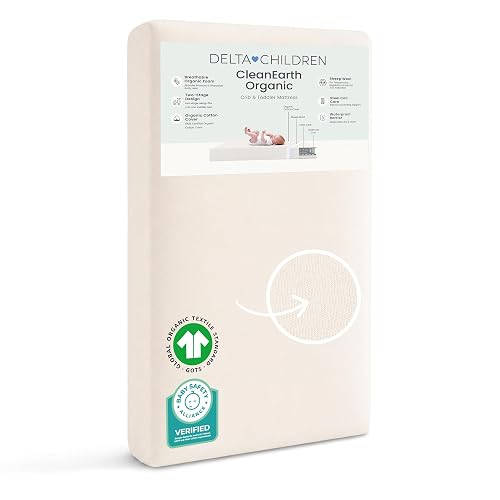
In the United States, the USDA National Organic Program sets rules for the word “organic” on agricultural products. Textiles are covered through a separate certification. The Global Organic Textile Standard (GOTS) is the most widely recognized textile certification and sets minimum organic fiber content, restricts certain chemicals and covers processing. Look for a GOTS certificate number rather than a loose claim like “made with organic cotton.”
A non organic crib mattress is not automatically unsafe. Plenty of conventional mattresses meet the federal safety standard for infant sleep products and have been tested for flammability. The difference is usually in the materials and the chemicals used during manufacturing, not in whether the baby can sleep on it safely.
Step 1: Check the Core Material
The core is the largest part of the mattress and the part your baby breathes against most. Start here.
Common core types
- Polyurethane foam: Lightweight and uniform. Conventional foam is petroleum-based. Some manufacturers use soy or plant-based polyols, which lowers the petroleum content but does not make the foam organic.
- Coconut coir: A natural fiber, often used as a base layer. It is firm and breathable and can be certified organic.
- Organic cotton batting: Common in mattress pads and lightweight classic mattresses. Look for GOTS certification.
- Organic wool: Naturally fire resistant, which can reduce the need for chemical flame retardants. Check for a certified source.
- Innerspring: Metal coils. Less common in modern crib mattresses and generally heavier.
When a label says “natural core” or “eco core,” ask what percentage is actually natural. A mattress with a foam core and a cotton cover is a hybrid, not an organic mattress.
Step 2: Read the Cover and Fabric Certifications
The cover is the layer closest to the baby’s skin and the one most likely to be touched and mouthed. It deserves close attention.
- Look for a GOTS or OCS (Organic Content Standard) certification on the packaging or product page.
- Check whether the stated certification covers the cover, the fill, or the whole product. These are different.
- Confirm the certifying body and certificate number if the manufacturer provides them.
- If the label says “organic cotton” with no certification, treat it as a marketing claim, not a verified one.
Step 3: Understand Flame Retardants
US federal rules require infant sleep products to meet a flammability standard, so every crib mattress sold in the country must pass a fire test. The way manufacturers meet that standard varies.
- Chemical flame retardants are added to foam or fabric. Some manufacturers offer mattresses labeled as free of added chemical flame retardants.
- Barrier systems use a fiber layer, such as wool or a fiber-based barrier, to slow ignition without chemical treatment.
- Inherently fire resistant materials like wool or certain blended fibers can meet the standard on their own.
Neither approach is automatically better. Check the manufacturer’s documentation for the specific method used. If you have questions about fire safety or chemical exposure, a pediatrician or a certified child product safety expert can help you weigh the options.
Step 4: Confirm Safe Sleep Standards
Whether organic or not, a crib mattress must be firm, flat and fit snugly in the crib frame. The mattress should fit within the crib with no more than about two fingers of space between the edge of the mattress and the crib side. A gap larger than that is a suffocation risk.
Look for a firm surface that does not give under a baby’s weight. Soft or sinking mattresses raise the risk of suffocation. The CPSC and AAP recommend a firm, flat surface with a fitted sheet and no pillows, blankets or bumpers.
Organic vs Non Organic Crib Mattress at a Glance
| Factor | Organic Crib Mattress | Non Organic Crib Mattress |
|---|---|---|
| Cover fabric | Usually GOTS or OCS certified organic cotton | Often conventional cotton or polyester blends |
| Core | May use coir, organic cotton or wool; some still use foam | Usually polyurethane foam or innerspring |
| Flame retardant approach | Often wool or barrier systems; check for chemical-free claims | Varies; may use chemical flame retardants |
| Safety standard | Must meet the same federal infant sleep product standard | Must meet the same federal infant sleep product standard |
| Certification to check | GOTS, OCS, GOTS-certified wool | Often none; check fire and chemical testing statements |
Common Mistakes When Comparing Organic and Non Organic Mattresses
- Assuming “organic” means fully organic. Check which layers are certified.
- Ignoring the fit. A perfectly organic mattress that is too small for the crib is unsafe.
- Buying soft because it feels comfortable to you. Babies need a firm surface.
- Trusting a claim with no certificate number. Ask the manufacturer for documentation.
- Forgetting the mattress protector. A waterproof pad needs its own organic or non-toxic certification if that matters to you.
- Overlooking the used market. Used mattresses carry extra risk of mold, damage and outdated fire standards, so buying used is generally not recommended.
Tips for Choosing the Right Crib Mattress
- Measure the crib interior before shopping, then buy a mattress labeled for that size.
- Ask the retailer or manufacturer for the GOTS or OCS certificate and the fire barrier method in writing.
- Pair a certified mattress with a certified waterproof pad so the whole sleep surface is covered.
- Air the mattress out for a day or two before first use if it has a strong smell, and ask the manufacturer how to clean it.
- Replace the mattress if it cracks, sags, gets wet or no longer fits snugly.
Recommended gear
Several products are commonly paired with an organic crib mattress. Each one below is a product type you can search for, and the links go to Amazon.
- Organic cotton fitted crib sheet: A snug, breathable sheet that fits the mattress without loose fabric. Look for GOTS certification and a fit that matches your mattress depth. View on Amazon
- Waterproof crib mattress protector: A protective layer that guards the core from spills and accidents. Choose one with a certified organic or non-toxic cover so the sleep surface stays consistent. View on Amazon
- Crib mattress measuring tape: A simple tool to confirm the mattress fits the crib interior with no more than two fingers of gap. View on Amazon
- Fitted crib sheet set with certificate: A set of two or three sheets so you always have a clean one ready. View on Amazon
FAQ
Is an organic crib mattress safer than a non organic one?
Not necessarily. Both types must meet the same federal flammability and infant sleep product standards. Organic mattresses may reduce exposure to certain chemicals, but safe sleep practices like a firm, flat surface and a snug fit matter more for infant safety.
What does GOTS certified mean on a crib mattress?
GOTS stands for Global Organic Textile Standard. It means the certified fabric meets minimum organic fiber content and restrictions on certain processing chemicals. Check that the certification covers the part of the mattress you care about most.
Are all organic crib mattresses free of flame retardants?
No. Some use wool or barrier systems, while others may use chemical flame retardants. Ask the manufacturer for the specific method and any testing documentation.
Can I use a non organic mattress with an organic sheet?
Yes. A certified organic fitted sheet can be used on any crib mattress that fits the crib. The sheet does not change the mattress’s core or fire barrier.
How do I know if the mattress fits my crib?
Measure the inside length and width of the crib frame, then compare with the mattress dimensions. The mattress should fit snugly, with no more than about two fingers of space at the edges.
How long does a crib mattress last?
Replace it if it sags, cracks, gets wet, or no longer fits snugly. Most manufacturers recommend checking condition regularly and replacing as needed rather than following a fixed timeline.
Should I buy a used organic crib mattress?
Buying used is generally not recommended. Used mattresses may carry mold, damage, or outdated safety standards, and their certifications may no longer apply.
Who can help me choose a safe crib mattress?
Your pediatrician can advise on safe sleep, and a certified child passenger safety or product safety expert can help you interpret fire and chemical claims.
Conclusion
An organic vs non organic crib mattress choice comes down to verified materials and clear documentation, not marketing language. Check the core, the cover certification and the fire barrier method, then confirm the mattress fits the crib and meets federal safety standards. For more detailed buying guides, see Organic Mattress for Crib: A Step-by-Step Guide to Safe Sleep (2026) and Naturepedic Organic Crib Mattress Pad: How to Choose and Use One Safely (2026).
Related reading
- Organic Quilted Crib Mattress Pad: How to Choose a Safe, Non-Toxic One (2026)
- Organic Dream Crib Mattress: How to Choose a Safe, Non-Toxic One (2026)
Ready to choose one?
About Audrey Hayes
Audrey Hayes is part of our editorial team and reviews and edits our natural & eco parenting guides, checking product details against manufacturer specifications and owner feedback.