As an Amazon Associate I earn from qualifying purchases. This page may contain affiliate links.
Shopping for the cheapest organic baby food pouches means balancing two things that do not always travel together: a lower cost per ounce and a clean, certified ingredient list. Many parents want pouches made with USDA-certified organic produce, no added sugar and no artificial additives, but they also need something they can afford to buy every week. This guide compares nine widely sold organic pouch options and explains how each one fits a tight budget. Our selection is based on manufacturer specifications, brand reputation, and patterns in owner feedback, not on any hands-on testing of our own.
Our Top Picks
Quick Comparison
| Product | Best for | Key feature |
|---|---|---|
| HAPPY BABY Clearly Crafted Stage 2 Variety Pack | Parents who want a clear view of ingredients | Clear pouch with visible contents |
| Gerber Organic 2nd Foods Variety Pack | Families buying in bulk | 18-pouch multipack |
| Earth’s Best Organic Apple Peach Oatmeal Pack | Babies 6 months and older | Resealable pouch with grain |
| Plum Organics +12 Months Variety Pack | Toddlers moving to bigger textures | Non-GMO recipes for older babies |
| Beech-Nut Stage 2 Veggie Pouch Variety Pack | Parents wanting a full veggie serving | One full serving of veggies per pouch |
| Gerber Stage 2 Fruit and Yogurt Variety Pouches | Babies who enjoy dairy-based flavors | Yogurt-blended fruit pouches |
| Happy Baby Organics Stage 2 Bananas, Raspberries and Oats | Single-flavor trial pouches | Oat-containing fruit puree |
| Happy Tot Organics Stage 4 Variety Pack | Older toddlers needing more protein and fiber | Fiber and protein fortified recipes |
| Gerber Stage 2 Organic Fruit Veggie Favorites | Smaller trial-size purchases | No added sweetener, 9-pouch pack |
HAPPY BABY Clearly Crafted Stage 2 Fruit and Veggie Variety Pack

USDA Organic & Vegan Baby Food, Full Serving of Veggies, Gluten-free, Clear Pouch Shows Real Ingredients Inside, Non-GMO HAPPY BABY Clearly Crafted, Stage 2, Fruit & Veggie Variety Pack, 4oz (10)
This pack suits parents who read labels closely and want to see what is inside the pouch. The clear film lets you check the color and texture of the puree before feeding.
Key specs
- USDA Organic and vegan labeling
- Gluten-free and non-GMO claims on the listing
- 4 oz pouches, 10 in the pack
- Stage 2 fruit and veggie blends
Pros
- Clear pouch makes ingredients easy to check
- Organic and non-GMO labeling is clearly stated
- Larger 4 oz size means fewer pouches to open per meal
Cons
- Smaller pack count than some bulk options
- Cost per ounce is higher than the biggest multipacks
Gerber Organic Baby Food Pouches, 2nd Foods Fruit and Veggie Variety Pack

Gerber Organic Baby Food Pouches, 2nd Foods for Sitter, Fruit & Veggie Variety Pack, 3.5 Ounce (Set of 18)
Families who go through a lot of pouches each week often find this 18-pack easier to manage than buying smaller sets. It is a practical choice when you want volume and a single brand across the week.
Key specs
- USDA organic fruit and vegetable blends
- 3.5 oz pouches
- Set of 18 pouches
- Designed for the second-foods stage
Pros
- Large pack keeps the per-pouch price low
- Variety of flavors reduces repetitive meals
- Widely available in US grocery and online channels
Cons
- Smaller 3.5 oz size may be less than one full meal for older babies
- Pouches are less visually transparent than some competitors
Earth’s Best Organic Apple Peach Oatmeal Pouch Pack
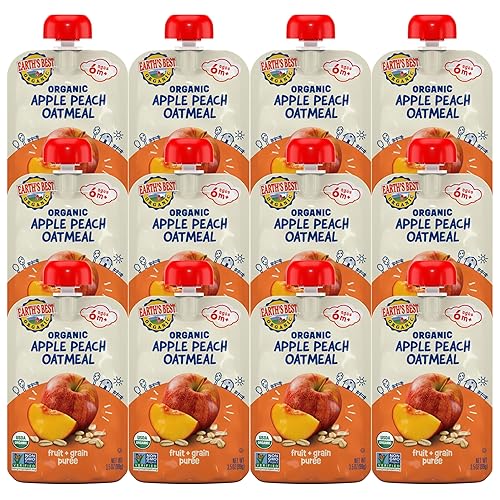
Earth's Best Organic Baby Food Pouches, Fruit and Grain Puree for Babies 6 Months and Older, Organic Apple Peach and Oatmeal Puree, 3.5 oz Resealable Pouch (Pack of 12)
This option is aimed at babies six months and older who are starting to take grains alongside fruit. The oatmeal blend makes it a little more filling than a plain fruit puree.
Key specs
- USDA organic fruit and grain puree
- 3.5 oz resealable pouches
- Pack of 12
- Designed for babies 6 months and older
Pros
- Resealable cap lets you save part of a pouch
- Oatmeal adds texture for transitioning eaters
- Established brand with a long organic history
Cons
- Only 12 pouches per pack
- Fruit-and-grain flavor may not suit babies who prefer savory taste
Plum Organics +12 Months Organic Baby Food Variety Pack

Plum Organics 12 Months Organic Baby Food -Variety Pack – Non-GMO – On-The-Go Pouches for Baby & Toddler Meals – Quality Tested Ingredients – 4 oz (Pack Of 12)
This pack is built for toddlers who are moving beyond purees and need a bit more substance. It works well as an on-the-go snack alongside family meals.
Key specs
- Organic, non-GMO ingredients
- 4 oz pouches
- Pack of 12
- Labeled for 12 months and older
Pros
- Formulated for the toddler stage
- Non-GMO and organic labeling are both stated
- 4 oz size is useful for a full toddler portion
Cons
- Not suitable for younger infants
- Pack count is modest for the price tier
Beech-Nut Stage 2 Real Fruit and Veggies Pouch Variety Pack

Real Fruit & Veggies Baby Food Pouches, 1 Full Serving of Veggies Per Pouch, No Added Sweeteners, No Artificial Preservatives Beech-Nut Stage 2 Baby Food Pouch Variety Pack, Veggie Purees, 18 Pouches
Parents who want vegetables to make up a bigger share of each meal may find this pack appealing. The listing emphasizes a full serving of veggies in each pouch.
Key specs
- One full serving of veggies per pouch, per the listing
- No added sweeteners and no artificial preservatives
- Stage 2 variety pack
- 18 pouches
Pros
- Veggie-forward recipes support taste exposure
- Large 18-pouch count
- No added sweeteners stated on the label
Cons
- Some babies find vegetable flavors less appealing at first
- Organic certification should be confirmed on the individual pouch label
Gerber Stage 2 Fruit and Yogurt Variety Pouches

Stage 2 fruit puree and yogurt pouches; variety pack; 18 x 3.5 oz Gerber Stage 2 Fruit and Yogurt Variety Pouches, 3.5 Oz, 18 Pack
This 18-pack suits babies who already accept fruit purees and are ready for a creamier texture. The yogurt flavors give a different taste profile from plain fruit.
Key specs
- Stage 2 fruit and yogurt blends
- 3.5 oz pouches
- 18-pack variety
Pros
- Yogurt blends add a different texture
- 18 pouches supports regular use
- Familiar brand for many families
Cons
- Contains dairy, so not suitable for dairy-free households
- Organic status should be checked on the specific pouch label
Happy Baby Organics Stage 2 Bananas, Raspberries and Oats Pouch

Happy Baby, Organic Organics Stage 2 Baby Food Pouches, Gluten Free, Vegan & Healthy Snack, Clearly Crafted Fruit & Veggie Puree, Bananas, Raspberries & Oats, 4 Ounces (Pack of 1)
This single pouch is useful for parents who want to trial one flavor before buying a full variety pack. It is also handy for travel.
Key specs
- USDA organic fruit and veggie puree
- Bananas, raspberries and oats
- 4 oz pouch
- Single-pack listing
Pros
- Good for testing a single flavor
- Oats add a bit of extra substance
- 4 oz size is generous for one serving
Cons
- Single pouch is not economical for regular feeding
- Cost per ounce is higher than multipacks
Happy Tot Organics Stage 4 Fruit and Veggie Variety Pack
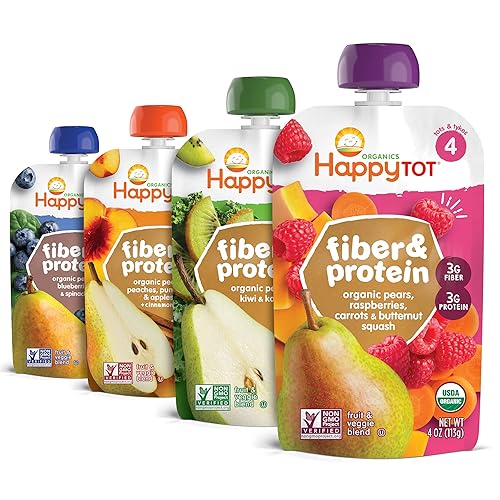
Happy Tot Organics Stage 4 Baby Food Pouches, Gluten Free, Vegan Snack, Fiber & Protein Fruit & Veggie Puree, Fruit & Veggie Variety Pack, 4 Ounce (Pack of 16), Amazon Exclusive
Older toddlers who need more protein and fiber in a portable snack may suit this stage 4 pack. It is designed for a later stage than the Stage 2 options above.
Key specs
- USDA organic, gluten-free, vegan labeling
- Fiber and protein fortified recipes
- 4 oz pouches, pack of 16
- Stage 4 labeling
Pros
- Higher protein and fiber than many puree pouches
- 16-pack gives decent volume
- Suits toddlers with bigger appetites
Cons
- Not appropriate for early-stage eaters
- Listing is marked as an Amazon exclusive, so availability may differ elsewhere
Gerber Stage 2 Organic Fruit Veggie Favorites Variety Pack

Stage 2 organic fruit and veggie puree pouches; variety pack; no added sweetener; 9 x 3.5 oz Gerber Stage 2 Organic Fruit Veggie Favorites Variety Pack, 3.5 Oz, 9 Pack
This 9-pack is a sensible option for families who want to try organic pouches without committing to a large box. It is also useful for babies who are still choosing their favorite flavors.
Key specs
- Organic fruit and veggie purees
- No added sweetener, per the listing
- 3.5 oz pouches, 9-pack
- Stage 2 variety
Pros
- Smaller pack is a low-commitment trial
- No added sweetener stated
- Familiar brand with broad availability
Cons
- Higher cost per pouch than the 18-count packs
- Only nine pouches per box
Buying Guide
Selection criteria for the cheapest organic baby food pouches
When people search for the cheapest organic baby food pouches, they usually mean the lowest cost per ounce that still carries a real USDA Organic seal. Divide the total price by the total ounces to compare fairly, because a larger pack is not always a better deal. Confirm the organic claim on each individual pouch, since some variety packs mix organic and non-organic lines.
Important features to check
- USDA Organic seal: Look for the seal itself, not just the word “organic” in marketing text.
- Stage labeling: Stage 1, 2, 3 and 4 pouches differ in texture and thickness. Match the stage to your baby’s age and eating skills.
- Added sugars and sweeteners: Check for fruit juice concentrate, cane sugar or other sweeteners in the ingredient list.
- Pouch size: 3.5 oz and 4 oz pouches are common. Older babies may need the larger size for a full serving.
- Resealable caps: Useful when a baby eats only part of a pouch.
Specs to check before buying
- Confirm the age or stage printed on the pouch.
- Calculate the cost per ounce from the pack total.
- Read the full ingredient list, not just the front panel claims.
- Check the expiration window, since bulk packs can take time to finish.
Choosing by need
- Lowest long-term cost: Look at the 18-pouch multipacks and compare cost per ounce carefully.
- Trying new flavors: A smaller variety pack or a single pouch lets you test before committing.
- Older toddlers: Stage 4 and 12-month-plus options usually offer more substance.
- Dairy-free households: Avoid yogurt-blended pouches and confirm all ingredients on the label.
Things to watch out for
- Variety packs can include flavors you do not need, so check the flavor list before buying.
- Pouch contents separate over time; shake gently before squeezing.
- Once opened, use the contents promptly or refrigerate according to the package directions. For storage methods, see our guide to Hygiene Tips for Storing Homemade Baby Food.
- Pouch plastics carry their own considerations. For more on reading resin codes, see Understanding Plastic Codes for Baby Product Safety.
FAQ
Are cheaper organic baby food pouches still truly organic?
Yes, if they carry the USDA Organic seal. The seal means the product meets federal organic standards regardless of price. Lower-cost options differ mainly in pack size and flavor mix, not in whether they meet the standard.
How do I calculate cost per ounce for baby food pouches?
Divide the total package price by the total number of ounces. For example, an 18-pack of 3.5 oz pouches contains 63 ounces in total. Use that figure to compare across brands and pack sizes.
Which stage should I choose for my baby?
Stage labels are guidelines based on texture and age. Stage 1 suits early starters, Stage 2 suits babies who are moving to thicker textures, and Stage 3 and 4 suit older toddlers. Check with your pediatrician if you have questions about introducing solids.
Do pouches need to be refrigerated after opening?
Follow the directions on each package. Most pouches should be used promptly once opened, and leftovers should not be saved for later feedings. If you transfer food to another container, use clean, food-safe storage.
Are organic pouches healthier than regular ones?
Organic certification addresses how ingredients are grown, including restrictions on certain synthetic pesticides. It does not by itself make a food more nutritious. Compare ingredient lists, sugar content and nutrition facts to judge overall quality.
Can I save money by buying pouches in bulk?
Often, yes. Larger multipacks usually lower the cost per ounce. Just confirm the expiration date and how many pouches your baby will realistically finish before it expires.
Should I consult a professional before changing my baby’s diet?
Yes. Talk with your pediatrician before making major changes to your baby’s feeding routine, especially if your baby has allergies, reflux or other medical concerns.
Conclusion
For the lowest cost per ounce on a USDA-certified product, the larger Gerber and Beech-Nut multipacks are worth comparing first. Parents who want to see what is inside each pouch may prefer the clear-pouch HAPPY BABY pack, while families of older toddlers may find the Happy Tot Organics Stage 4 pack or the Plum Organics 12-month-plus pack more suitable. If you are only trying a new brand, the 9-count Gerber Favorites pack is a low-commitment starting point. Whatever you choose, read each pouch label, match the stage to your baby, and check with your pediatrician with any feeding questions.